

Visiting your dentist more often can be important in several ways. Among them are detecting gum disease, checking for signs of mouth cancer, and even sleep apnea.
Checking for signs of mouth cancer
Visiting Dentist Eugene OR more frequently can help you catch early signs of mouth cancer. During a dental appointment, your dentist checks the inside of your mouth, including your tongue, lips, and jaw. During this exam, your dentist will also look for sores, lumps, or abnormal tissue.
The most common oral cancer is squamous cell carcinoma. This type of cancer typically develops on the most superficial layer of the oral mucosa.
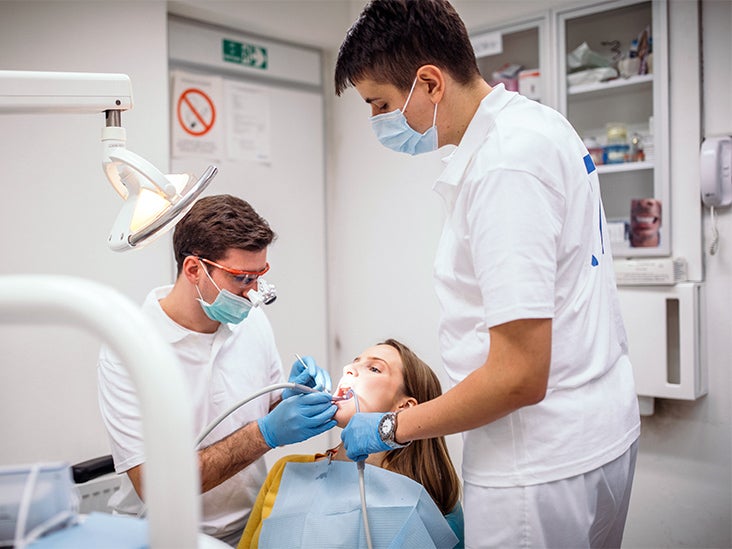
If your dentist suspects you have oral cancer, you’ll have to undergo a biopsy. In a biopsy, the dentist will remove some of the abnormal tissue and send it to a pathologist for examination. The dentist will also take x-rays to check for changes in the bite.
Oral cancer is not only a killer, but it is also difficult to detect. While there are a number of oral cancer screening tests, these are not all effective.
Detecting sleep apnea
Detecting sleep apnea and visiting your dentist more often will not only help you prevent dental issues, but also improve your overall health. Sleep apnea is a medical condition that causes a person to stop breathing for up to seconds, minutes, or even hours at a time while asleep. It can lead to serious health complications and death.
Dentists are often the first health care professionals to recognize sleep apnea in patients. They use simple screening tools to identify patients at risk.
These tools are easy to implement and can provide fast results. Many of them can be used during annual checkups. Ideally, dentists should be able to work with medical providers to diagnose and treat sleep apnea.
A dentist’s ability to recognize and diagnose sleep apnea is based on the dental professional’s specialized training on the oral cavity. They also have relationships with laboratories that fabricate oral devices. These include mouth guards, bite splints, and mold retainers.
Detecting gum disease
Detecting gum disease by visiting your dentist more often can prevent severe problems. If left unchecked, gum disease can lead to serious health problems, including jawbone damage and tooth loss.
The earliest stage of gum disease, known as gingivitis, is easy to treat. Gingivitis can be treated by cleaning and brushing your teeth.
Gum disease is caused by plaque, a sticky substance of bacteria that builds up on teeth. Brushing and flossing are important to keep plaque from gathering.
When plaque builds up, it can harden into tartar. Tartar can then form pockets between your teeth and gums. These pockets can lead to infections, bleeding and other gum problems.
Detecting gum disease by visiting your dentist more often can help you avoid the cost and complications of more invasive procedures. Your dentist will also be able to give you advice on how to keep your teeth and gums clean.
X-rays
X-rays are an essential part of your dental health. They help your dentist detect cavities and infections. They also help your dentist plan future dental procedures. A dentist can also use X-rays to determine whether you need to have a tooth pulled. They are also very important when you change dentists.
In addition to being a helpful tool, X-rays are also a safe way to get a close look at your teeth. The radiation that goes into X-rays is very small compared to the natural background radiation. This means it is safe for children and adults.
In addition to showing you what is going on with your teeth, X-rays also reveal changes in your jaw bone. If you have gum disease or an infection, the bone around your teeth may deteriorate.
Dental radiography
X-rays are a way of showing the dentist what is going on in the mouth. They show the inside of the teeth, gums and bone. They can help the dentist find cavities, cysts, and other problems that cannot be seen by the naked eye.
X-rays are also used to detect oral infections. A dentist uses x-rays to see whether a tooth is out of place, whether there is a cavity between teeth, or whether the tooth needs to be pulled. They can also detect fractures or breaks in teeth. These x-rays are important for finding cavities and other dental problems before they become painful or cause complications.
A panoramic x-ray is a special type of x-ray that shows the entire mouth in one image. It can help diagnose problems with jaws, the temporomandibular joint, and wisdom teeth. They can also be used to plan for implanted dental devices.